Phoenix HVAC answering service
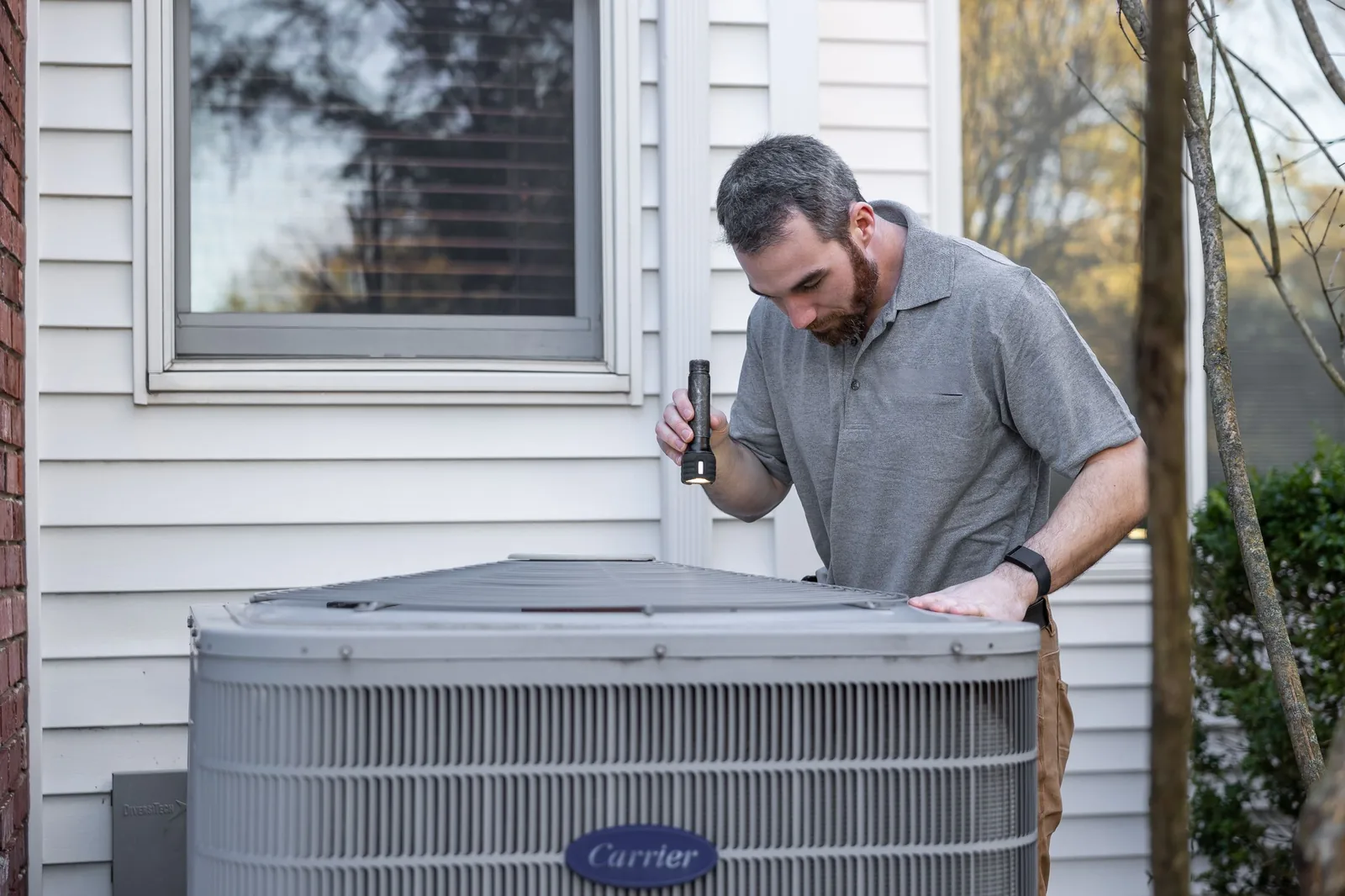
A Phoenix HVAC answering service should split a no-cooling call from a tune-up before anyone promises a truck. The home with no air at all is the call your on-call rule is for. The filter change, the noisy unit, and the "can you come quote a replacement" are messages. The National Weather Service office in Phoenix says heat is the deadliest weather in Arizona, and it names people without effective cooling as the ones a hot day hits first. Your line is not 911, and it is not a staffed dispatch desk. It is a brief, a transfer to your own tech when you wrote that rule, and a summary you can read when you come off the roof.
This is not a forecast, and it is not a claim that RingKit has a Phoenix office or a Phoenix customer. The only local facts below are from one page, the NWS Phoenix heat page, opened 14 November 2026.
What that weather page actually says
The NWS Phoenix heat page says heat is the deadliest weather in Arizona. It says the office issues alerts in the hottest months so people know a day is not ordinary. It describes HeatRisk as a 0 to 4 scale for the next seven days, built from how far above normal the highs and lows are, how long the heat lasts, and overnight temperatures. Level 0 is no elevated risk. Level 1 is a minor risk for people extremely sensitive to heat, especially without effective cooling or enough water. Level 2 is a moderate risk for people sensitive to heat, again especially without effective cooling. Level 3 is a major risk for much of the population, especially people who are heat sensitive or without effective cooling. Level 4 is an extreme risk for everyone, from long heat with little relief overnight.
The page says that when major or extreme HeatRisk is forecast, the office issues an Extreme Heat Watch or an Extreme Heat Warning. A watch means moderate confidence, which the page puts at 50 percent, that extreme heat will occur. A warning means that confidence has risen to a high level, which the page puts at 80 percent or more. It also says many lower-elevation places in the Southwest that live with chronic heat do not get the lesser Heat Advisory. So "no alert today" is not the same sentence as "the heat cannot hurt anyone."
A warning is not a call count
The page describes a 2022 look at heat-related calls to the City of Phoenix Fire Department. It says call volume rose with the HeatRisk category, that the largest spikes lined up with major and extreme levels, and that calls still came in on low-risk days. It does not print a single tally you can quote as this week's number, so do not invent one. The same page says heat-associated deaths in Arizona can occur with temperatures in the mid-80s and hotter, from research done with the Centers for Disease Control and Prevention, and that people acclimate as summer goes on, which is why there is no single temperature that always triggers an alert. A 105-degree day in May and a 105-degree day in July are not the same day to the office. They should not be the same day to your script either, if the difference is "warning" versus "ordinary hot."
No cooling is not a tune-up
Write two paths, and make the receptionist pick one at the start of the call.
A no-cooling call is a home or a business where the air is off or the space is getting hot and they want someone now. Take the address, whether it is a house or a commercial site, whether any air is moving at all, and a callback number. Ask whether anyone there is especially at risk only if your brief tells you to ask that, and only as a question, not a diagnosis. If your rule says this call transfers to the on-call tech, transfer it to that tech's phone. If the tech does not answer, the caller gets a message. They do not get "a technician is on the way." You have not dispatched anyone until a person accepts the job.
A routine call is a tune-up, a quote for a replacement, a noisy condenser, a thermostat question, or a filter. Take the address, the equipment if they know the brand, what they want done, and two times they can be home. Do not quote a repair you have not seen. If the brief has a price you will stand behind for a maintenance visit, the line can say that price. If the price depends on the unit, say so. Nothing is scheduled until you confirm it. RingKit does not put the visit on a calendar.
One script will get both calls wrong
The mistake is one script for both. A tune-up questionnaire on a no-cooling call wastes the minutes you meant to spend reaching the tech. A promise of a same-day truck on a filter call fills the board with work you did not accept. You will hear that promise come back as a complaint, because the caller wrote it down even if you did not.
Listen to the first sentence and pick the path. "The house is hot and the air is off" is the transfer rule, if you wrote one. "The unit is loud and we want a quote this month" is a message with the address and two times they can be home. "Can you come today for a filter" is a message too, unless the brief says a filter is a same-day trip. Say which of those you mean. The caller will not sort them for you.
The brief has to know your map and your limits
Write the cities and neighborhoods you actually serve. Do not let the line add the next suburb because the caller asked. Write the hours, and write the after-hours rule as its own sentence: what transfers, to which number, and what becomes a message. Write the equipment you service and the work you do not do. A company that does residential change-outs should not sound like it takes every rooftop chiller in the valley.
Write what you will not say. You do not diagnose a failed compressor from a description. You do not tell someone to open a panel, jump a wire, or add refrigerant. You do not promise a part is on the truck. If a price is not in the brief, the answer is a message, not a guess. A wrong price on a replacement is harder to unwind than a callback after you have seen the unit.
The receptionist always says it is an AI. Calls are recorded and transcribed so you get a summary, and a consent notice plays on every call. The summary should be readable in a truck: who called, the address, no cooling or not, and the next step you owe them. Read it between jobs. Answering calls while working is the reason that note exists. You are not going to climb down for every ring.
911 is not one of your transfer targets
The NWS page's safety section is written for the public, not for an HVAC brief. It says heat stroke is life-threatening and tells people to call 911 or the local emergency number. Your receptionist should be allowed to say that, in those words, and then stop. It should not walk a caller through cooling a person, and it should not transfer a medical emergency to a tech as if the tech were an ambulance.
You do not need the page's whole symptom list in the prompt. You need one rule: if the caller is describing a medical emergency, tell them to call 911, and do not troubleshoot the air conditioner on top of it. A hot house with people who are uncomfortable is still your no-cooling path, if that is the rule you wrote. A person who may be in heat stroke is not an HVAC ticket. Those are different calls, and the brief should not blur them.
The page also lists who it considers at greater risk, including infants, adults over 65, and people without effective cooling. You can ask, on a no-cooling call, whether anyone there needs the cooling back sooner. You cannot rank strangers or promise you will arrive first. You know whether your on-call phone answers.
A warning day and an ordinary hot day
On a day the office has an Extreme Heat Warning up, the no-cooling path should be easy to reach and short. The questions are the address, whether any cooling is running, and the callback. Then transfer or message, per the rule. Do not add a sales questionnaire. The page's point about an alert is that the day is not ordinary. Your phone should match that, without pretending you are the fire department. The 2022 pattern on the page, calls still arriving on lower-risk days, is why the no-cooling rule should exist on a quiet June afternoon too. Heat risk does not start at the warning.
On an ordinary day, the routine path can be longer, because a quote call can spare five minutes for equipment type, access, and the times they can meet. Keep it inside what you wrote. A caller who wants a guaranteed morning should hear that you confirm the time later. A shop with a dispatcher looking at the board can hold the slot. An AI receptionist cannot.
If several techs take different calls, name them. "No cooling in a house" goes to the on-call number. "Commercial quote" goes to the owner, or to a message if the owner is on a roof. A missed transfer is a message with the address filled in. Test that path. The caller should not hear that help is coming when nobody picked up.
What you pay for, and what you should not replace
The rate is $0.20 a minute while the receptionist is on the call. The first 10 seconds are free, then time bills in 6-second increments, so a 2:10 call bills as 2:00. The number is $1.99 a month. There is no plan, no seat fee, and no monthly minimum. A month with no calls still costs $1.99 if you keep the number. You top up a prepaid wallet. The smallest top-up is $10, and a payment method is required before the number is active. The pricing page lists the same rates.
That fits a small shop whose phone is quiet until a hot week, and whose techs cannot answer while they are in an attic. It is a poor fit if you sell guaranteed emergency response and you already staff a desk that can put a real truck on a real clock. Keep that desk. An answering line does not create a technician, a part, or a promise the city would recognize as dispatch. If a caller needs that promise, say you do not make it.
Do not use this article as a volume plan. The weather page does not say how many of your customers will call. A long troubleshooting call simply costs more, which is why the brief should already hold the service area, any maintenance price you publish, and the fact that a visit is not booked until you confirm it.
Keep the number they already have
Forward the shop number. RingKit does not port it. Customers, and the magnets on the van, keep the number they know. Ring your phones first when someone can pick up, and send the unanswered calls to the receptionist. The setup for that forward is the same idea as any other shop that works with its hands full, and the cost of missing the ring is the subject of missed business calls.
An electrician's line has a similar boundary between a routine estimate and a call you will not troubleshoot blind. That writeup is electrician answering service. The Phoenix-specific part is the heat page: no cooling is the path you define because the weather office already treats "no effective cooling" as part of the risk, and because a warning day is not a day for a tune-up script.
Put the two paths in the brief before the next hot week. Transfer only the calls you named. Tell a medical emergency to call 911. Take a message for everything else, with the address on it, and call them back when you are on the ground.